
Authority Business Lessons from an Accidental Entrepreneur
Online business is often spoken about as either a “bold risk taking” endeavour, or a “you need this one weird trick” kind of thing. Neither are true in my own case.
I’ve been going through some past webinars and found something I thought you would find useful.
While my accidental entrepreneur story has featured in interviews and keynotes, I don’t think I have included this particular version of it here before, so I thought it would be a good inclusion.
This isn’t a rags-to-riches story or anything like that. It’s an abbreviated but practical look at how I went from humble kid IT contractor to running a stable online business that supports a family and provides an amazing creative outlet.
I’ve been known as an IT guy, a programmer, a webmaster, an SEO, affiliate, and blogger. Along the way, I built authority, found my niche(s), and figured out how to make things work without burning out.
Here’s what actually helped.
Basic IT Nerd to Web Developer
I didn’t go to university, I went straight from school while turning 16 into short term IT contracts for the NHS, hopping between entry-level gigs like data inputting and creating reports in Supercalc and Dataease.

Eventually, I landed an IT, network and systems administration job with the local community college that got me elbow-deep with the internet just as the web was starting to take off. That lead to a gig with an internet consultancy …
… and then came redundancy.
Getting let go hits hard, but it was especially rough because it came while my newborn daughter was seriously unwell. That time was rough.
It did give me a clear goal: I wanted more control over my own destiny because I didn’t want to be in this position ever again.
Freelancing on the Job
My next job led to working with some well-known clients and getting deeply involved in developer communities. Sharing what I learned in forums and groups slowly built my reputation and a tiny but supportive following.

Helping out in forums, making connections, and writing articles led to being named a Microsoft MVP. That wasn’t a goal, it just happened from consistently showing up and being useful, plus obviously knowing the right people. The side effect was some people started to take me seriously for the first time.
I accepted freelance programming, teaching, and writing work wherever and whenever I could. Partly because I felt if I said no it would never come around again. People reached out to me – I didn’t sit down with a grand plan, it grew naturally as I kept listening and responding to what people needed.
Networking Helped More Than I Expected
Going to meetups and staying in touch with people in my niche opened a lot of doors. Not just for work, but for support. Being known and trusted still matters more than any fancy funnel or automation.

Networking helped the blogging and blogging helped people connect with me before, during, and after networking events. I wasn’t just blogging about programming, either, which also helped me connect with people over shared interests versus just careers.
An opportunity with a Webmaster World contact took me from employed web developer to startup CTO, which burned brightly but briefly, and then lead to me going solo full-time in 2005.
Content That Works to Build a Business
Blogging helped me pull everything together, sharing what I knew, attracting the right clients, and staying visible. But blogging alone isn’t magic. It works when it’s paired with real connection and a reason to keep showing up.

The business grew by focusing on content that:
- Attracts the right people
- Helps them stick around
- Inspires them to take action
- Encourages sharing.
That sounds simple, but it takes focus. I still write with those steps in mind.
The Business Model That Lasted
I learned (the hard way) that chasing every opportunity just leads to stress and burnout.
Cutting out the busywork and sticking to what moves the needle gave me more time for family and better results.
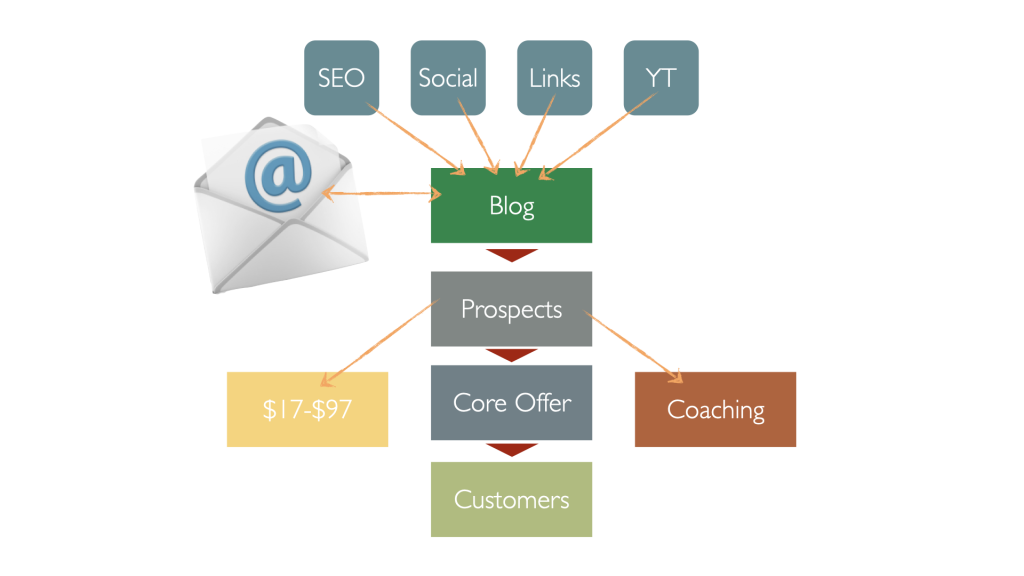
I rely on three things:
- A flagship or core offer
- Coaching and consulting
- Smaller offers to bring people in
That mix helps me stay steady without overloading any one area.
How I Launch Without Being an Extrovert
A good launch doesn’t need tricks. Stick to three goals:
- Educate people about the problem
- Show what’s possible
- Make it easy to act
That’s it. If people are ready, they buy. If not, keep helping until they are.
Keep It Useful, Keep It Focused
The best marketing still comes down to listening. When I pay attention to what people ask for and match that with what I can offer things tend to work out.
It’s called “Product Market Fit” in technical circles, but really it is solving problems that people actually have rather than convincing people to buy something you made already. Miss that, and even the best strategy falls flat.
Bottom Line
If you’re trying to build a business that fits your life, not just your income goals, focus on three things:
- Be helpful
- Build real authority through consistently turning up
- Stay adaptable
You don’t need to be loud. You just need to be useful and visible in the right places.